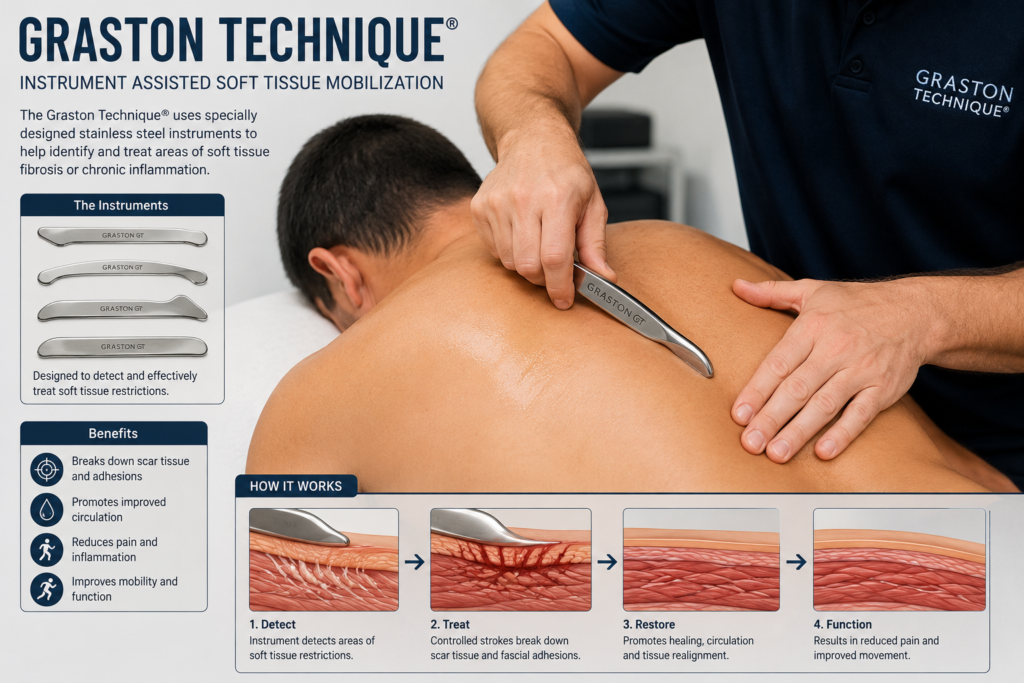
The graston technique works through a specialized form of instrument-assisted soft tissue mobilization, where trained practitioners use stainless-steel tools to gently scan and treat the surface of the skin. These tools help identify areas of muscle tightness, scar tissue, and fascial restrictions that may not be easily detected through manual touch alone. Once these problem areas are located, controlled pressure is applied to break down adhesions and encourage better blood flow to the affected tissues. Over time, this process supports the body’s natural healing response and helps restore normal movement patterns.
By stimulating soft tissue in a targeted way, the graston technique promotes cellular repair and reduces chronic inflammation in injured or overused muscles. The scraping motion is not random; it follows specific anatomical structures to ensure precision and effectiveness. Many patients experience a mild “scraping” sensation during treatment, which is often followed by improved flexibility and reduced stiffness. This combination of mechanical stimulation and biological response is what makes the technique widely used in sports rehabilitation and physical therapy settings.
Conditions Commonly Treated with Graston Technique
The graston technique is commonly used to treat a wide range of musculoskeletal conditions that involve pain, stiffness, or restricted movement. It is especially popular in sports medicine and rehabilitation clinics because it targets soft tissue injuries that often fail to respond fully to rest or basic therapy. Conditions such as plantar fasciitis, tennis elbow, carpal tunnel syndrome, and Achilles tendonitis are frequently treated using this method. It is also used for chronic muscle tightness, ligament strain, and scar tissue formation after surgery or injury, where normal tissue movement has become limited.
In many cases, patients dealing with repetitive strain injuries or overuse conditions benefit the most from the graston technique, as it helps break down adhesions that develop over time. Office workers with neck and shoulder stiffness, athletes recovering from training injuries, and individuals with post-surgical scar tissue often see improvements in mobility and pain reduction. The technique is not a standalone cure but is typically included as part of a broader rehabilitation plan that includes stretching, strengthening, and corrective exercises to ensure long-term recovery.
Benefits of Graston Technique
The graston technique offers several important benefits, especially for individuals dealing with chronic pain, restricted movement, or soft tissue injuries. One of the primary advantages is improved range of motion, as the treatment helps break down scar tissue and adhesions that limit normal muscle and joint function. Many patients report reduced stiffness and better flexibility after a few sessions, making daily activities and physical performance easier. It also helps stimulate blood circulation in the treated area, which supports faster tissue repair and healing.
Another key benefit of the graston technique is pain reduction without the use of medication or invasive procedures. By targeting the underlying soft tissue dysfunction rather than just the symptoms, it provides a more long-term approach to recovery. Athletes often use it to speed up recovery from training injuries, while non-athletes benefit from relief in areas such as the back, neck, shoulders, and legs. When combined with exercise therapy, it can significantly enhance rehabilitation outcomes and help prevent future injuries by improving tissue quality and mobility.
What Happens During a Graston Technique Session?
During a graston technique session, the treatment typically begins with a short assessment where the practitioner identifies areas of pain, stiffness, or restricted movement. The patient may be asked to perform simple movements so the therapist can better understand which muscles or tendons are affected. Once the target area is identified, a special lubricant is applied to the skin to allow smooth movement of the stainless-steel instruments. The practitioner then gently glides the tools over the skin in controlled strokes, focusing on specific soft tissue structures.
As the session progresses, the graston technique instruments help detect areas of restriction through subtle changes in texture and resistance under the tool. These spots are treated with repeated, precise movements to encourage tissue remodeling and improve blood flow. Patients may feel mild pressure or a scraping sensation, and slight redness can appear temporarily due to increased circulation. After the session, light stretching or rehabilitation exercises are often recommended to enhance results and maintain improved mobility over time.
Potential Side Effects and Safety Considerations
The graston technique is generally considered safe when performed by a trained and certified practitioner, but like any manual therapy, it may produce some temporary side effects. The most common reactions include mild soreness, redness, or slight bruising in the treated area, especially after the first few sessions. This occurs because the technique stimulates soft tissue and increases blood flow, which can make the skin and underlying muscles temporarily sensitive. In most cases, these effects are mild and resolve within a few hours to a couple of days.
However, the graston technique may not be suitable for everyone. Individuals with certain conditions such as active infections, open wounds, severe osteoporosis, or blood clotting disorders should avoid or carefully consider this therapy under medical guidance. It is also important that the technique is performed by a qualified professional, as incorrect use of the instruments can lead to unnecessary discomfort or tissue irritation. Proper assessment before treatment ensures safety and helps determine whether this therapy is appropriate for a patient’s specific condition.
Graston Technique vs. Other Soft Tissue Therapies
The graston technique is often compared with other manual therapy methods such as deep tissue massage, myofascial release, and cupping therapy. While all these approaches aim to improve soft tissue function and reduce pain, the Graston Technique stands out because it uses specially designed stainless-steel instruments rather than just hands. This allows practitioners to detect restrictions more precisely and apply consistent pressure across targeted areas. As a result, it is often considered more focused and measurable in treating scar tissue and adhesions.
In contrast, traditional massage therapy relies more on hand techniques and may provide broader muscle relaxation, whereas the graston technique is more specific and clinical in its approach. Myofascial release focuses on stretching and loosening connective tissue, while cupping therapy uses suction to increase blood flow. Many rehabilitation professionals actually combine these methods depending on the patient’s condition. However, the Graston Technique is especially preferred in sports medicine settings where faster recovery and precise soft tissue treatment are required.
Is Graston Technique Right for You?
The graston technique may be a suitable option if you are dealing with chronic muscle tightness, sports injuries, or limited mobility that has not improved with basic rest or exercise. It is commonly recommended for individuals who want a non-invasive approach to pain relief and functional recovery. Athletes, fitness enthusiasts, and even office workers with posture-related discomfort often benefit from this therapy when it is included as part of a structured rehabilitation plan.
However, the graston technique is not a one-size-fits-all solution. Its effectiveness depends on the nature of the injury, overall health condition, and consistency with follow-up exercises. A professional assessment is essential before starting treatment to ensure it is appropriate for your specific needs. In many cases, therapists combine it with stretching, strengthening, and corrective movement training to achieve the best long-term results rather than relying on it alone.
Conclusion
The graston technique has become a widely used soft tissue therapy for individuals struggling with pain, stiffness, and movement limitations caused by injuries or repetitive strain. By using specialized instruments to target scar tissue and fascial restrictions, it helps improve blood flow, reduce discomfort, and restore normal mobility. When applied correctly by trained professionals, it can be an effective part of a comprehensive rehabilitation program, especially for sports-related and chronic musculoskeletal conditions.
However, it is important to remember that the graston technique works best when combined with other therapies such as stretching, strengthening exercises, and posture correction. It is not a standalone cure but a supportive treatment that enhances the body’s natural healing process. With proper guidance and consistent care, many individuals experience noticeable improvements in pain levels, flexibility, and overall physical function.
FAQs
What is the Graston Technique used for?
The graston technique is used to treat soft tissue injuries, reduce scar tissue, and improve mobility in conditions like plantar fasciitis, tennis elbow, and muscle stiffness.
Is the Graston Technique painful?
The graston technique may cause mild discomfort during treatment, especially in tight or injured areas, but it is generally tolerable and temporary.
How many sessions are needed?
The number of sessions varies depending on the condition, but many patients see improvement within a few treatments when combined with rehabilitation exercises.
Is the Graston Technique safe?
Yes, the graston technique is considered safe when performed by a trained professional, though mild redness or soreness may occur after sessions.
For More Updates Visit: journalingtechniques