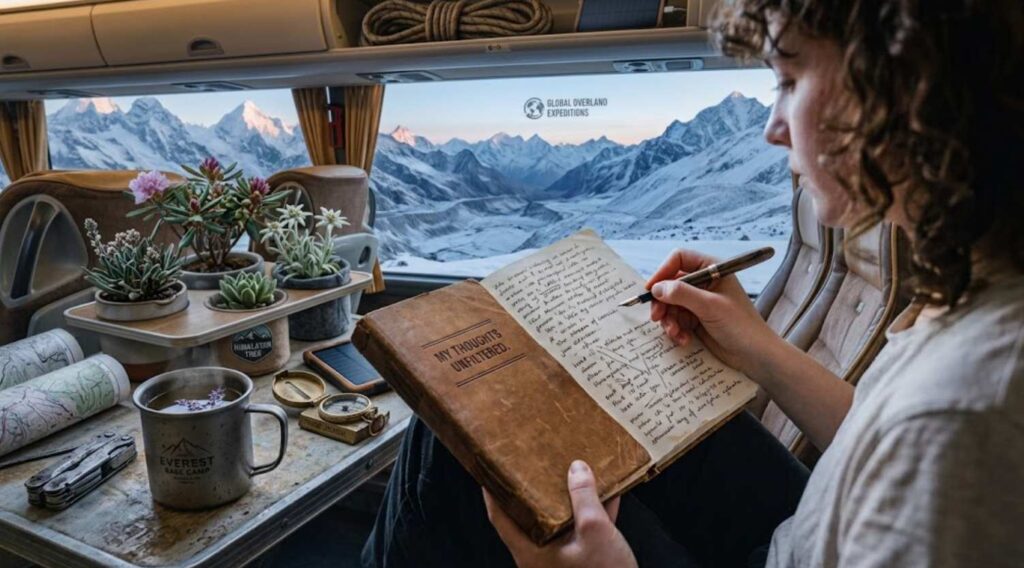
Some travel memories stay with us for years, while others slowly fade. You may remember the view from a mountain, the smell of a local market, or a funny conversation with someone you met, but small details can disappear surprisingly quickly.
Travel journaling helps preserve those moments.
A travel journal is more than a record of where you went. It can capture how a place felt, what surprised you, what you learned, the food you tried, the people you met, and the small experiences that made a trip memorable.
You do not need to be a professional writer or artist to keep one. A few honest notes, photos, tickets, sketches, or short reflections can turn an ordinary notebook into a personal record you may enjoy reading years later.
What Is Travel Journaling?
Travel journaling is the practice of recording experiences, memories, observations, and thoughts during or after a trip.
Some travelers write detailed daily entries. Others prefer short notes, photographs, sketches, maps, receipts, or lists of favorite places.
There is no single correct way to create a travel journal.
A journal might include:
- Places you visited
- Food you tried
- People you met
- Unexpected moments
- Local traditions
- Personal reflections
- Photos and tickets
- Favorite memories
- Travel lessons
The goal is to create a personal record of the journey rather than simply documenting an itinerary.
If journaling itself is new to you, understanding what journaling is can make it easier to decide how you want to use your travel journal.
Why Keep a Travel Journal?
Photos are excellent for capturing what a place looked like, but they do not always capture what you were thinking or feeling at that moment.
Imagine looking at a photo from a trip five years later. You may remember the location, but you might forget why the day was special.
A travel journal can preserve details such as:
We found this tiny café after getting lost for almost an hour. It was not part of our plan, but it became one of my favorite places on the entire trip.
That short note tells a story that a photo alone may not explain.
Travel journaling can also help you slow down and notice more about your surroundings.
Instead of simply moving from one attraction to another, writing encourages you to observe details such as sounds, smells, conversations, local habits, and your own reactions.
What Should You Write in a Travel Journal?
Many beginners think every travel journal entry needs to be a long description of the entire day.
It does not.
Some of the best entries are short and specific.
You can write about:
Where You Went
Record the location, neighborhood, attraction, restaurant, beach, trail, or town you visited.
Add details that may help you remember the experience later.
For example:
The street was much quieter than I expected, with small cafés and old buildings on both sides.
What You Experienced
Write about something that happened rather than only listing places.
Maybe you:
- Tried a new food
- Missed a train
- Discovered a hidden street
- Watched a sunset
- Learned a local phrase
- Met an interesting person
These small moments often become the most memorable parts of a trip.
How You Felt
Travel can create many emotions.
You may feel excited, nervous, amazed, tired, confused, peaceful, or even homesick.
Writing about those feelings gives your travel journal more personality.
What Surprised You
Some of the best travel observations come from things you did not expect.
Ask yourself:
- What was different from what I imagined?
- What surprised me about the culture?
- What place exceeded my expectations?
- What experience did not go as planned?
What You Learned
Travel often teaches practical and personal lessons.
You might learn something about:
- Another culture
- Local history
- Traveling more efficiently
- Your own preferences
- Handling unfamiliar situations
Recording those lessons can make your journal more meaningful.
How to Start a Travel Journal
Starting a travel journal is easier when you keep the process simple.
Choose Your Journal Format
You can use a traditional notebook or keep everything digitally.
A physical travel journal works well if you enjoy handwriting, sketching, attaching tickets, or collecting small souvenirs.
A digital journal can be more convenient if you prefer typing and adding photos quickly.
If you like using your phone, tablet, or laptop, this guide to digital journaling explains how to create and organize a journal electronically.
Decide When You Will Write
You do not need to spend an hour journaling every day.
Many travelers write:
- During breakfast
- On trains or flights
- While resting at a café
- Before going to sleep
- After returning home
Even five minutes can be enough to capture the main memories of the day.
Record Details Before You Forget Them
Small details can disappear quickly.
If something interesting happens, write a short note on your phone or in your notebook.
You can expand it later.
For example:
Red door, little bakery near hotel, cinnamon pastry, owner recommended local park.
That quick note may be enough to bring the entire memory back later.
Travel Journal Ideas for Beginners
A travel journal does not have to contain only paragraphs.
Different formats can make it more interesting and easier to maintain.
Daily Highlights
At the end of each day, write your three favorite moments.
For example:
Best food: Fresh pasta at the small restaurant near the station
Best place: Sunset viewpoint above the city
Funniest moment: Getting on the wrong bus
This method is quick and works well for busy trips.
One Memory Per Page
Instead of documenting every hour, choose one meaningful memory from each day.
Describe:
- What happened
- Why it stood out
- How it made you feel
Travel Lists
Lists can make useful journal pages.
Ideas include:
- Foods I tried
- Places I want to revisit
- Things that surprised me
- Best views
- Favorite cafés
- New words I learned
- Things I would do differently next time
Photo Journal
Choose one or two photos from each day and write a short story behind them.
This creates a simple visual travel diary without requiring long entries.
Map Journal
Add a small map of your route and mark:
- Places visited
- Favorite stops
- Restaurants
- Unexpected discoveries
You can add short notes next to each location.
Travel Journal Prompts
Prompts are especially helpful when you want to write but do not know where to begin.
Try questions such as:
- What was the best moment of today?
- What surprised me most?
- What did this place feel like when I first arrived?
- What local food did I try?
- Who did I meet today?
- What made me laugh?
- What challenged me?
- What would I recommend to someone visiting this place?
- What did I notice that tourists might normally miss?
- What did I learn about the local culture?
- What would I do differently if I visited again?
- What moment do I never want to forget?
If you enjoy prompt-based writing, you can also explore these journal writing prompts for additional ideas.
What Can You Put in a Travel Journal Besides Writing?
One of the most enjoyable parts of travel journaling is collecting small items connected to your journey.
You might add:
- Train tickets
- Boarding passes
- Museum tickets
- Postcards
- Restaurant cards
- Maps
- Receipts
- Stickers
- Printed photos
- Small brochures
- Handwritten notes
These items can make the journal feel more personal.
You do not need to save everything. Choose items that represent meaningful memories.
This creative style can also overlap with junk journaling, where everyday paper items and keepsakes become part of the journal. If that interests you, read this guide on what is junk journaling.
How to Make a Travel Journal More Creative
A travel journal can be as simple or decorative as you want.
You can add:
Sketches
You do not need professional drawing skills.
Try sketching:
- A building
- A meal
- A landscape
- A street sign
- A coffee cup
- A small object from the trip
The drawing does not need to be perfect. Its purpose is to help you remember the moment.
Color
Use colored pens, markers, or highlighters to separate different types of memories.
For example:
- Food experiences
- Favorite places
- Travel tips
- Funny moments
Mini Layouts
You can create simple pages with sections for:
Location
Best moment
Food
Weather
What I learned
If you enjoy designing journal pages, these bullet journal ideas may give you additional layout inspiration.
Should You Journal During the Trip or Afterward?
Both approaches work.
Writing during the trip helps preserve details while they are fresh.
However, travel days can be busy. You may not always have time or energy to write.
A useful approach is to make short notes during the trip and expand them later.
For example, during the day you might write:
Market, rain, old bookshop, tea with locals.
Later, you can turn those notes into a full entry.
This method allows you to enjoy your trip without feeling that journaling has become another task.
How to Keep Travel Journaling Consistent
Many people start a travel journal with excitement and then stop after a few days.
The problem is often unrealistic expectations.
You do not need to document everything.
Choose a routine that fits your trip.
You might decide to:
- Write one paragraph each night
- Record three highlights per day
- Add one photo and one memory
- Journal every second day
- Write a longer reflection after the trip
Consistency becomes much easier when the habit is simple.
The same principle applies to journaling in general. If you struggle to keep writing regularly, this guide on how to start a journaling habit can help you build a realistic routine.
Common Travel Journaling Mistakes
Trying to Record Everything
A travel journal does not need to be a complete record of every meal, journey, and activity.
Focus on what mattered.
Waiting Too Long to Write
Memories lose detail quickly.
Even a few keywords written during the day can help you remember more later.
Making Every Page Perfect
Do not let beautiful travel journals online create unnecessary pressure.
Your journal is supposed to record your experience, not impress other people.
Only Writing About Tourist Attractions
Sometimes the most meaningful travel memories happen away from famous attractions.
Write about:
- Conversations
- Mistakes
- Unexpected discoveries
- Small observations
- Quiet moments
Those experiences often make a travel journal unique.
A Simple Travel Journal Entry Example
Here is an example of how simple a useful entry can be:
We reached the old part of the city just before sunset. The main square was crowded, so we walked into one of the smaller streets nearby. We found a tiny bakery with only three tables. I tried a local pastry I had never heard of before. It ended up being one of my favorite memories because we found the place completely by accident.
Notice that the entry does not describe the entire day.
It focuses on one memorable moment.
That is often enough.
Travel Journaling After You Return Home
Your journal does not have to end when the trip ends.
After returning home, consider writing a final reflection.
Ask:
- What was my favorite experience?
- What surprised me most?
- What did I learn?
- What would I change next time?
- Which place would I revisit?
- How did this trip affect me?
You can also organize photos, tickets, and notes while the memories are still fresh.
A final reflection can turn a collection of daily entries into a complete story of your journey.
Frequently Asked Questions
What is a travel journal?
A travel journal is a personal record of trips, experiences, memories, observations, and reflections. It can include writing, photographs, tickets, drawings, maps, and other travel keepsakes.
What should I write in a travel journal?
Write about memorable places, food, people, unexpected experiences, emotions, lessons, and anything you want to remember from the trip.
How do beginners start travel journaling?
Start with a notebook or digital journal and record a few important moments each day. Short entries are completely fine.
Do I need to journal every day while traveling?
No. You can journal whenever it feels useful. Daily writing can help preserve details, but even occasional entries can create a meaningful travel record.
Can a travel journal include photos?
Yes. Photos, tickets, postcards, maps, sketches, and other keepsakes can make a travel journal more personal and memorable.
Is a travel journal the same as a travel diary?
The terms are often used interchangeably. A diary may focus more on recording daily events, while a travel journal can also include reflections, creative elements, photos, and collected items.
Final Thoughts
Travel journaling is not about documenting every minute of a journey. It is about preserving the moments that matter.
A beautiful view may be captured in a photograph, but your journal can preserve what that moment felt like.
A train ticket may look ordinary, but years later it can remind you of an unexpected adventure.
Whether you keep a detailed notebook, a simple digital journal, or a collection of photos and short notes, the best travel journal is one that reflects your own experience.
Start small. Write what you noticed, what surprised you, and what you want to remember.
Years from now, those simple notes may bring an entire journey back to life.