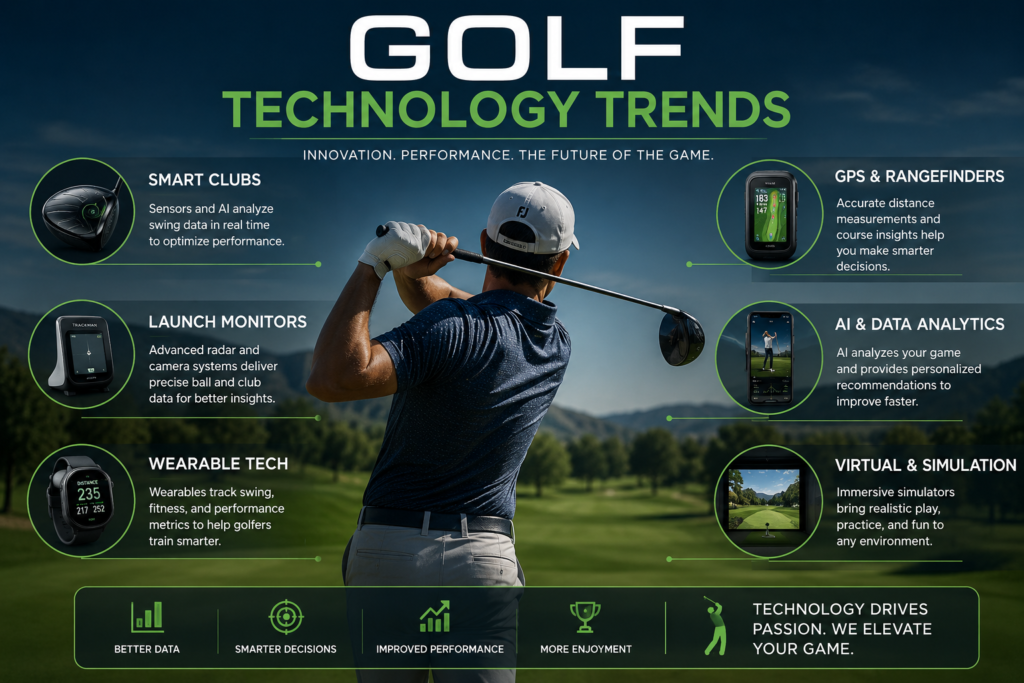
One of the most influential developments in modern golf technology is the rise of advanced launch monitors. These sophisticated devices use radar systems, high-speed cameras, and powerful software to track and analyze every aspect of a golf shot. Golfers can instantly access important metrics such as ball speed, launch angle, spin rate, carry distance, club path, and shot dispersion. In the past, this level of detailed performance analysis was primarily available to professional players and elite coaches. Today, launch monitors have become more affordable and accessible, allowing amateur golfers to use the same data-driven training methods as professionals. By providing accurate and objective feedback, these devices help players identify weaknesses, refine their swing mechanics, and make smarter equipment choices, making them one of the most transformative innovations in golf technology.
Artificial Intelligence in Golf Training
Artificial intelligence is rapidly transforming golf technology, especially in the way players train and improve their performance. AI-powered systems can now analyze swing videos, detect mechanical flaws, and provide personalized feedback that once required a professional coach. These tools use computer vision and machine learning to study body movement, club position, tempo, and impact consistency, helping golfers understand exactly what is affecting their shots. Many modern training apps also combine AI with historical performance data, allowing players to track long-term improvement patterns and receive tailored practice drills based on their weaknesses. This level of intelligent analysis is making golf training more efficient, more affordable, and far more precise than traditional methods, giving both beginners and experienced players a powerful advantage in skill development.
Smart Golf Clubs and Sensor Technology
Smart golf clubs equipped with embedded sensors represent a major shift in golf technology, bringing real-time data directly into the golfer’s hands. These clubs are designed with micro-sensors placed inside the grip or shaft that track swing speed, face angle, tempo, and impact location. The collected data is then sent to a mobile app, where players can review detailed performance insights after each shot or practice session. This immediate feedback helps golfers understand exactly how small adjustments in grip or stance can influence the outcome of their swing.
Beyond individual improvement, smart club technology is also being used by coaches and training academies to monitor students more effectively. By comparing swing patterns over time, instructors can create highly personalized training programs tailored to each player’s strengths and weaknesses. As golf technology continues to evolve, smart clubs are becoming an essential tool for bridging the gap between amateur practice and professional-level precision, making training more interactive, measurable, and efficient.
GPS and Rangefinder Innovations
GPS and rangefinder systems have become an essential part of modern golf technology, changing how players approach course management and shot planning. These devices provide accurate yardages to greens, hazards, bunkers, and layup zones, helping golfers make smarter decisions before every shot. Advanced models now go beyond basic distance measurement by offering slope-adjusted readings, wind data, and elevation changes, giving a more realistic “plays like” distance that improves shot accuracy on unfamiliar courses.
The integration of GPS technology into handheld devices and smartwatches has also made navigation on the course much easier. Players can view detailed hole layouts, track their position in real time, and plan strategies without relying heavily on course guides or guesswork. This level of precision has significantly improved decision-making for both amateur and professional golfers, making GPS-based systems one of the most practical and widely used tools in modern golf technology.
Wearable Technology for Golfers
Wearable devices are becoming a major part of modern golf technology, offering golfers real-time insights into both performance and physical condition. Smartwatches, fitness trackers, and swing sensors can now measure heart rate, step count, swing tempo, and even stress levels during a round. These devices also provide GPS-based distance tracking, allowing players to quickly identify yardages to greens and hazards without interrupting their game flow. By combining health data with performance metrics, wearables give a more complete picture of how a golfer performs under different physical and mental conditions.
Another important benefit of wearable golf technology is its role in long-term performance improvement. Players can review detailed round summaries that highlight consistency, fatigue patterns, and areas where performance drops over time. Coaches also use this data to design smarter training routines that balance skill development with physical fitness. As wearable devices continue to evolve, they are becoming not just accessories but essential training companions that help golfers play smarter, stay healthier, and improve steadily over time.
Virtual Reality and Golf Simulators
Virtual reality and golf simulators have become a powerful part of modern golf technology, allowing players to experience realistic gameplay without needing to be on an actual course. High-end simulators use advanced sensors, high-speed cameras, and 3D mapping systems to recreate real-world golf courses with impressive accuracy. Players can practice their swing, test different clubs, and play famous courses from around the world in an indoor environment. This has made golf training more accessible, especially in regions where weather conditions or limited space restrict outdoor practice.
Virtual reality adds another layer of immersion by placing golfers directly inside a simulated course environment. With VR headsets, players can visually experience course layouts, hazards, and shot angles in a highly interactive way. This type of golf technology is especially useful for mental preparation, helping golfers build confidence and improve decision-making before stepping onto a real course. As VR and simulation software continue to advance, they are expected to play an even bigger role in both professional training and recreational golf experiences.
Data Analytics and Performance Tracking
Data analytics has become a core part of modern golf technology, changing how players understand and improve their game. Instead of relying on feel alone, golfers now use detailed statistics to evaluate every aspect of their performance, including fairways hit, greens in regulation, putting efficiency, and shot dispersion. These insights are gathered through tracking systems, mobile apps, and connected devices that record data across multiple rounds. By analyzing this information, players can clearly identify patterns, strengths, and weaknesses that were previously difficult to detect.
For coaches and professional players, performance tracking tools provide an even deeper level of insight. Advanced dashboards allow them to compare practice sessions, monitor progress over time, and design data-driven training plans. This makes practice sessions more focused and efficient, as players can target specific problem areas rather than guessing what needs improvement. As golf technology continues to evolve, data analytics is becoming one of the most powerful tools for turning raw performance into measurable growth and long-term consistency.
The Future of Golf Technology
The future of golf technology is expected to become even more intelligent, connected, and personalized as innovations continue to advance. Emerging developments such as AI-driven coaching systems, fully automated swing correction tools, and real-time biomechanical analysis are likely to redefine how golfers train and compete. Equipment manufacturers are also experimenting with smart materials and adaptive club designs that adjust to a player’s swing style, potentially creating more consistent performance across all skill levels. These advancements suggest a future where golf improvement becomes faster, more precise, and highly individualized.
At the same time, the integration of cloud computing and big data will make golf ecosystems more connected than ever. Players will be able to sync performance data across devices, receive instant coaching feedback, and even simulate competitive scenarios against global player databases. This evolution of golf technology will not only enhance performance but also make the game more engaging and accessible for new generations. As innovation accelerates, golf is steadily transforming from a traditional sport into a highly data-driven and tech-enhanced experience.
Conclusion
The rapid growth of golf technology has completely reshaped how the game is played, practiced, and understood. From launch monitors and AI-powered coaching tools to smart clubs, wearable devices, and advanced simulators, every aspect of golf is now supported by data-driven innovation. These technologies are helping players of all levels improve accuracy, consistency, and decision-making while also making training more efficient and engaging.
As the sport continues to evolve, golf technology will play an even greater role in bridging the gap between amateur and professional performance. The future promises more personalized training systems, smarter equipment, and deeper performance insights that will redefine traditional golfing methods. Ultimately, technology is not replacing the skill of the game—it is enhancing it, making golf more precise, accessible, and enjoyable for everyone.
FAQs
What is golf technology?
Golf technology refers to modern tools and systems like launch monitors, GPS devices, AI coaching apps, and smart equipment that help players analyze and improve their performance.
How does golf technology help players improve?
It provides accurate data on swing speed, distance, accuracy, and technique, allowing golfers to identify weaknesses and make targeted improvements.
Are golf technology devices useful for beginners?
Yes, beginners benefit greatly because these tools offer instant feedback, making it easier to learn correct techniques and avoid bad habits early.
What is the future of golf technology?
The future includes more AI-driven coaching, smarter equipment, and fully connected systems that provide real-time personalized performance insights.
For More Updates Visit: journalingtechniques