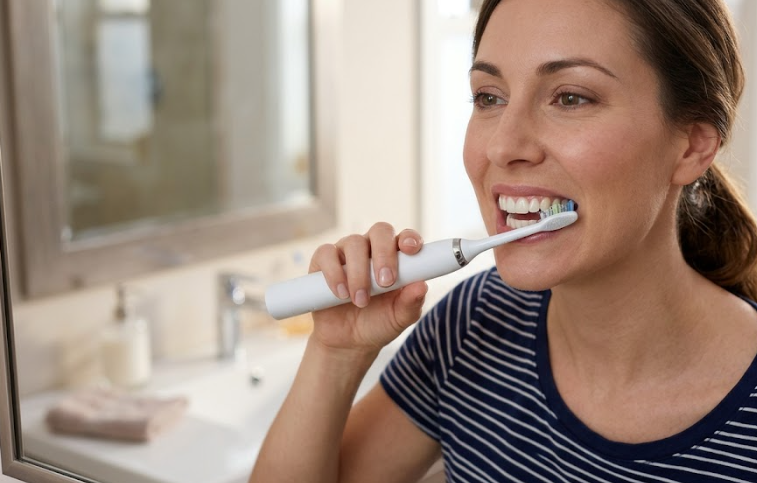
The foundation of the best electric toothbrushing technique is realizing that an electric toothbrush works differently from a manual one. Instead of scrubbing back and forth, the brush head is designed to rotate, vibrate, or oscillate to break up plaque efficiently on its own. Your job is not to apply force but to guide the brush slowly along each tooth surface so it can do its work effectively.
Most people make the mistake of brushing too quickly, which reduces cleaning quality and leaves plaque behind, especially near the gumline where bacteria tend to accumulate. A proper technique involves holding the brush at a slight angle toward the gums and pausing briefly on each tooth before moving on. This slow, controlled movement allows the bristles to reach tight spaces and clean more thoroughly without damaging enamel or irritating the gums.
A major mindset shift is required to get the best results. Many users still treat electric brushing like traditional brushing, but the key is to let the device do the heavy lifting while you focus on coverage and consistency. When done correctly, this approach not only improves oral hygiene but also helps reduce gum inflammation, bad breath, and long-term dental issues.
Choosing the Right Electric Toothbrush
Selecting the right toothbrush plays a major role in achieving the best electric toothbrushing technique, because not all electric brushes are designed the same. Some models use oscillating-rotating heads, while others rely on sonic vibrations, and each type offers a slightly different cleaning experience. The key is to choose a brush that feels comfortable in your hand, fits easily in your mouth, and includes essential features like a timer and pressure sensor to guide proper brushing habits.
Another important factor is the brush head design. Smaller brush heads are generally more effective because they can reach difficult areas like back molars and along the gumline. Soft bristles are also strongly recommended by dental professionals, as they clean effectively without causing unnecessary wear on enamel or irritation to sensitive gums. Many people assume harder bristles clean better, but in reality, they often do more harm than good over time.
Modern electric toothbrushes also come with different cleaning modes such as sensitive, whitening, or gum care. While these features can be helpful, the most important thing is consistency and proper usage rather than relying solely on technology. A well-chosen toothbrush supports good technique, but it does not replace the need for mindful and controlled brushing habits.
Step-by-Step Expert-Approved Brushing Method
Using the best electric toothbrushing technique effectively means following a simple but structured routine that ensures every tooth surface is cleaned properly. Start by placing the brush head against your teeth before turning it on, as this prevents splattering toothpaste and helps you maintain control from the very beginning. Hold the brush at a slight 45-degree angle toward the gumline so the bristles can gently clean both the teeth and the edge of the gums where plaque tends to build up.
Once the brush is on, move it slowly from tooth to tooth without scrubbing or rushing. Spend a few seconds on each section, allowing the electric motion to do the cleaning work. Divide your mouth into four sections—upper right, upper left, lower right, and lower left—to ensure no area is missed. This method helps maintain consistency and prevents uneven cleaning, which is a common issue with fast brushing habits.

Finally, don’t forget the inner surfaces of your teeth and your tongue. Many people overlook these areas, but they are essential for complete oral hygiene and fresh breath. Gently guiding the brush across these surfaces ensures a full-mouth clean and maximizes the benefits of your electric toothbrush routine.
Common Mistakes People Make
Even when using a good device, many people fail to achieve the best electric toothbrushing technique because of simple but impactful mistakes. One of the most common errors is applying too much pressure, assuming it will clean teeth more effectively. In reality, pressing too hard can wear down enamel, irritate gums, and reduce the efficiency of the brush’s movement. Electric toothbrushes are designed to clean with minimal effort, so force is unnecessary and often harmful.
Another frequent mistake is rushing through the brushing routine. Many users spend less than the recommended time and move the brush too quickly across their teeth, which leads to uneven cleaning. This often leaves plaque behind in hard-to-reach areas, especially near molars and the gumline. Skipping sections of the mouth or not following a systematic pattern also contributes to incomplete oral hygiene over time.
A less obvious but equally important mistake is neglecting replacement of brush heads. Worn-out bristles lose their cleaning effectiveness and can harbor bacteria, reducing overall hygiene quality. Dental professionals generally recommend replacing brush heads every three months or sooner if the bristles appear frayed, ensuring consistent performance and better oral health outcomes.
Timing, Pressure, and Brushing Frequency
Mastering the best electric toothbrushing technique is not only about movement but also about how long, how often, and how gently you brush. Timing is one of the most overlooked factors in oral hygiene. Most dental professionals recommend brushing for at least two minutes, giving equal attention to all areas of the mouth. Many modern electric toothbrushes include built-in timers to help users maintain this standard, ensuring no section is rushed or ignored.
Pressure control is equally important because electric toothbrushes are designed to clean effectively with minimal force. Applying too much pressure can lead to gum recession and enamel wear over time, even if the brushing technique itself is correct. A gentle touch is enough, and many devices now include pressure sensors that alert you when you are pressing too hard, helping you develop healthier long-term habits.
Brushing frequency also plays a major role in maintaining oral health. Dentists typically recommend brushing twice a day—once in the morning and once before bed—to remove plaque buildup and prevent bacteria from accumulating overnight. Consistency is more important than intensity, and maintaining this routine ensures long-term protection against cavities, bad breath, and gum disease.
Special Tips for Braces, Kids, and Sensitive Gums
Applying the best electric toothbrushing technique becomes even more important when dealing with specific oral conditions like braces, sensitive gums, or children’s teeth. For people with braces, plaque and food particles tend to get trapped around brackets and wires, making thorough cleaning essential. In this case, it is best to move the electric toothbrush slowly around each bracket, spending extra time on edges and gumlines to ensure no buildup is left behind. Using a smaller brush head can also help improve precision in hard-to-reach areas.
For individuals with sensitive gums, gentleness is the priority. A soft-bristled brush and a sensitive mode setting can significantly reduce discomfort while still providing effective cleaning. It is important to avoid any aggressive movements and instead let the brush glide slowly along the gumline. Over time, this careful approach can help reduce inflammation and improve overall gum health without causing irritation.
When it comes to children, supervision and guidance are essential to build proper habits early. Many kids tend to rush or move the brush incorrectly, so teaching them to focus on slow, gentle coverage can make a big difference. Making brushing a routine activity with fun timers or music can also encourage consistency, helping them develop strong oral hygiene habits that last into adulthood.
Toothbrush Maintenance and Oral Hygiene Habits
Maintaining your toothbrush properly is an essential part of following the best electric toothbrushing technique, because even the most advanced brushing method loses effectiveness if the tool itself is not clean and functional. After each use, the brush head should be rinsed thoroughly under running water to remove toothpaste residue and debris. It should then be stored upright in an open space where it can air-dry, as damp environments encourage bacterial growth and reduce hygiene quality over time.
Another important aspect is regular replacement of brush heads. Over time, bristles become frayed and lose their ability to clean effectively, which can lead to incomplete plaque removal. Most dental professionals recommend changing the brush head every three months, or sooner if visible wear appears. Keeping track of replacement schedules ensures consistent cleaning performance and helps maintain healthy gums and teeth in the long run.
Beyond the toothbrush itself, overall oral hygiene habits also play a crucial role in supporting results. Flossing daily, staying hydrated, and limiting sugary foods all contribute to better oral health outcomes. When combined with proper brushing technique, these habits create a strong foundation for preventing cavities, gum disease, and long-term dental problems.
Conclusion
The best electric toothbrushing technique is not about brushing harder or longer, but about brushing smarter with the right method and consistency. When you understand how to properly guide the toothbrush, maintain gentle pressure, and cover every section of your mouth, you significantly improve your chances of preventing plaque buildup, cavities, and gum problems. Small adjustments in daily habits can lead to noticeable long-term improvements in both oral health and confidence.
What makes this technique truly effective is its simplicity. By choosing the right toothbrush, following a structured brushing pattern, and avoiding common mistakes, anyone can elevate their oral hygiene routine without needing complex tools or extra effort. Over time, these habits become second nature, helping maintain a cleaner, fresher, and healthier smile with minimal stress.
Ultimately, consistency is the key factor that ties everything together. Even the best technique will only deliver results when practiced regularly and correctly. When combined with good oral care habits, this approach ensures long-lasting dental health and a brighter smile you can rely on every day.
FAQs
What is the best electric toothbrushing technique?
The best electric toothbrushing technique involves holding the brush at a slight angle toward the gumline, guiding it slowly across each tooth, and letting the brush do the cleaning without scrubbing or applying pressure.
How long should I brush with an electric toothbrush?
Dentists recommend brushing for at least two minutes, dividing the mouth into four sections to ensure even and complete cleaning of all tooth surfaces.
Can I press hard while using an electric toothbrush?
No, pressing hard can damage enamel and irritate gums. Electric toothbrushes are designed to clean effectively with light pressure and gentle movement.
How often should I replace my electric toothbrush head?
It is generally recommended to replace the brush head every three months or sooner if the bristles become worn or frayed for best cleaning results.
For More Updates Visit: journalingtechniques