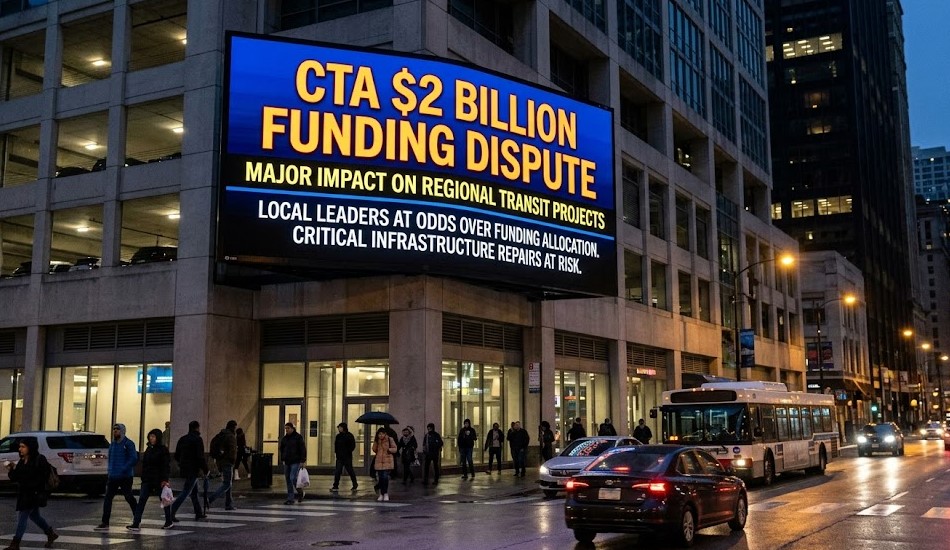
The CTA $2 billion funding dispute has emerged as a significant legal and transportation issue involving the Chicago Transit Authority (CTA) and the federal government. The conflict centers on billions of dollars that were previously allocated to major transit projects, including the Red Line Extension and modernization efforts across Chicago’s rail network. When federal officials paused access to the funding, CTA leaders argued that the decision threatened ongoing construction, future improvements, and thousands of jobs connected to these projects. The dispute quickly moved into the courts, where judges were asked to determine whether the federal government had the authority to withhold money that had already been approved through grant agreements.
The controversy extends beyond Chicago because it raises broader questions about federal oversight, transportation policy, and infrastructure funding nationwide. Supporters of the CTA argue that reliable transit investments are essential for economic growth, neighborhood development, and improved mobility for residents who depend on public transportation every day. Meanwhile, federal officials maintain that reviewing funding agreements is necessary to ensure compliance with government requirements and policy objectives. As legal proceedings continue, the CTA $2 billion funding dispute has become a closely watched case that could influence how future transit grants are administered across the United States.
What Is the CTA $2 Billion Funding Dispute?
The CTA $2 billion funding dispute refers to a legal conflict between the Chicago Transit Authority and the federal government over billions of dollars that were designated for major public transportation projects. The funding was intended to support long-term infrastructure improvements, most notably the Red Line Extension project, which aims to expand rail service to underserved communities on Chicago’s South Side. After the federal government froze access to the funds during a policy review, CTA officials argued that the move jeopardized construction schedules, contractor agreements, and the overall success of projects that had already received approval and financial commitments.
As the disagreement intensified, the CTA filed a lawsuit challenging the funding freeze and seeking the release of the money. The transit agency contends that the grants were legally awarded and should not be withheld after project agreements were finalized. Federal officials, however, have argued that they retain the authority to review funding arrangements and ensure compliance with federal priorities. This disagreement has transformed what began as a funding issue into a high-profile legal battle that could shape future relationships between local transit agencies and the federal government.
Why Did the Federal Government Freeze the Funding?
The federal government’s decision to freeze the CTA $2 billion funding dispute projects was largely tied to a broader review of how transportation grants were being awarded and implemented. Officials indicated that certain funding agreements were being reassessed to ensure compliance with federal policy standards, including requirements related to contracting practices and program oversight. This review process led to the temporary suspension of funds connected to several large-scale infrastructure projects in Chicago, including key CTA rail expansions and modernization work.
Supporters of the decision argue that federal agencies have a responsibility to ensure transparency, accountability, and fairness in how public money is distributed. They claim that reviewing large grants helps prevent misuse of funds and ensures that projects align with national infrastructure priorities. However, critics of the freeze say that halting already-approved funding disrupts long-term planning and creates uncertainty for major transit projects, potentially delaying construction and increasing costs for taxpayers.
The Red Line Extension and Other Affected Projects
The CTA $2 billion funding dispute is closely tied to the Red Line Extension project, one of Chicago’s most ambitious transit expansion plans in decades. The project is designed to extend rail service further south, improving access for communities that have historically been underserved by public transportation. It includes new stations, upgraded infrastructure, and improved connectivity to help reduce travel times and support economic development in surrounding neighborhoods. The federal funding freeze raised concerns that construction timelines could be delayed, potentially pushing back completion dates and increasing overall project costs.
Beyond the Red Line Extension, other CTA modernization efforts have also been affected. These include upgrades to existing rail lines, station improvements, and system-wide infrastructure enhancements aimed at improving reliability and safety. Contractors and local agencies involved in these projects rely heavily on federal funding commitments, so any interruption can create financial uncertainty and slow down progress. As a result, the dispute has highlighted how dependent large urban transit systems are on consistent federal support for long-term development.
CTA’s Legal Challenge Against Federal Officials
In response to the funding freeze, the Chicago Transit Authority escalated the CTA $2 billion funding dispute by filing a lawsuit against federal officials. The CTA argues that the withheld funds were already approved under legally binding grant agreements, meaning the federal government does not have the right to pause or cancel them without proper justification. According to CTA leadership, the sudden suspension of funding disrupted ongoing contracts, placed construction timelines at risk, and created uncertainty for thousands of workers involved in transit projects.
The lawsuit also claims that the funding freeze may have been influenced by policy disagreements rather than legitimate legal concerns, raising questions about fairness and consistency in federal grant enforcement. CTA officials are seeking a court order to restore access to the full funding package so that infrastructure work can continue without interruption. This legal action has turned the dispute into a high-stakes case that could define how far federal agencies can go in reviewing or reversing previously awarded transportation funds.
Court Rulings and Key Developments
The CTA $2 billion funding dispute took a major turn when the case reached federal court, where judges were asked to evaluate whether the funding freeze was lawful. In early proceedings, the court indicated concern over the government’s decision to suspend funds that had already been awarded through established grant agreements. This raised important legal questions about whether federal agencies can change or pause funding conditions after commitments have been formally made to local transit authorities.
In response to the arguments presented, the court ordered temporary measures that supported the continuation of funding while the legal review was ongoing. This decision was seen as a significant win for CTA officials, as it allowed critical projects to proceed without immediate financial disruption. However, the ruling did not fully resolve the dispute, and further hearings were scheduled to determine the long-term legality of the funding freeze. As the case continues, each court development is being closely watched because it may set a precedent for future infrastructure funding conflicts across the country.
Economic and Community Impact of the Funding Freeze
The CTA $2 billion funding dispute has had wide-reaching effects beyond legal and political circles, especially on local communities and the regional economy. Many of the affected transit projects are designed to improve access to jobs, education, and healthcare, particularly in underserved areas of Chicago. When funding is delayed or paused, construction timelines stretch out, which can slow down expected benefits such as reduced commute times, better station access, and improved neighborhood connectivity.
Economically, the funding freeze also creates uncertainty for contractors, suppliers, and construction workers who depend on steady project financing. Large infrastructure projects like the Red Line Extension generate thousands of jobs during construction, and any interruption can lead to reduced work hours or paused employment. Local businesses near planned transit expansions may also experience delayed growth opportunities, as improved transportation links often drive increased customer traffic and investment in surrounding areas.
What Happens Next in the Dispute?
The CTA $2 billion funding dispute is expected to continue moving through the federal court system as both sides prepare for further legal arguments. The central question moving forward is whether the federal government had sufficient legal grounds to pause funds that were already allocated under approved grant agreements. Future hearings will likely focus on the balance between federal oversight authority and the contractual obligations tied to large infrastructure funding commitments.
At the same time, policymakers and transit officials are closely watching the outcome because it could determine how similar disputes are handled in the future. If the court ultimately rules in favor of the CTA, it may reinforce the idea that once federal transit funds are awarded, they cannot be easily withdrawn without clear legal justification. However, if the government’s position is upheld, it could expand federal authority to review and pause funding even after agreements are signed, potentially reshaping how transportation projects are financed across the United States.
Why This Case Matters for Public Transit Nationwide
The CTA $2 billion funding dispute is not only a local issue for Chicago but also a case with national implications for public transportation policy. Across the United States, transit agencies rely heavily on federal grants to build and maintain rail systems, bus networks, and modernization projects. Any legal precedent set in this case could influence how future funding agreements are structured, reviewed, and enforced, potentially affecting cities far beyond Chicago.
This dispute also highlights the growing tension between long-term infrastructure planning and shifting federal policy priorities. Transit projects often take years or even decades to complete, meaning they depend on stable and predictable funding streams. If federal agencies gain broader authority to pause or reassess previously awarded funds, it could introduce uncertainty into future projects, making it harder for cities to plan large-scale transportation improvements with confidence. As a result, the outcome of this case is being closely monitored by transportation leaders, policymakers, and urban planners nationwide.
Conclusion
The CTA $2 billion funding dispute highlights a major conflict between federal oversight and local infrastructure development, with billions of dollars in transit funding at the center of the legal battle. The case has already affected key projects like the Red Line Extension and raised concerns about delays, rising costs, and long-term planning challenges for Chicago’s public transportation system. As the courts continue to review the legality of the funding freeze, the outcome remains uncertain but highly significant.
Beyond Chicago, this dispute could shape how federal transit grants are managed across the United States in the future. Whether the decision strengthens federal authority or protects previously awarded funding commitments, it will likely set an important precedent for how large infrastructure projects are funded and protected. The cta $2 billion funding dispute continues to be a closely watched case with potential nationwide impact on public transit policy.
FAQs
What is the CTA $2 billion funding dispute about?
It is a legal battle over frozen federal funding for major Chicago transit projects, including the Red Line Extension.
Why was the funding frozen?
Federal officials said the funding was under review to ensure compliance with policy and contracting rules.
Which projects are affected?
The Red Line Extension and several CTA modernization and rail improvement projects.
What could be the outcome of the case?
The court could either restore full funding or uphold federal authority to pause transit grants under review.
For More Updates Visit: journalingtechniques